Time to light the fire. Hmm, not enough logs to keep me going: out to the woodpile.
OMG, there’s a bird’s nest.
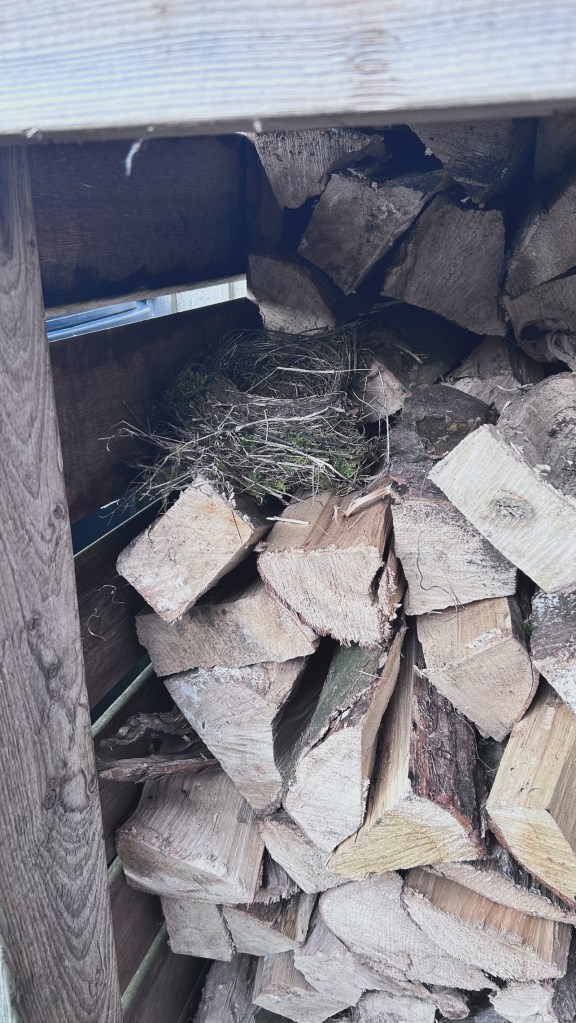
Hmm, must be abandoned, let’s take it out and have a look.
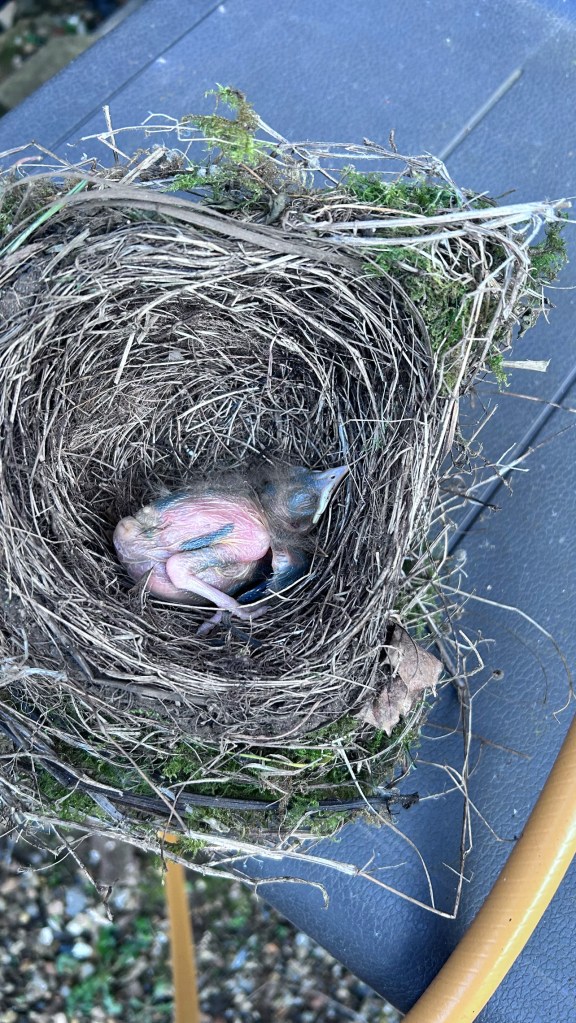
Ahhhh… he (she?) must be brand spanking new, eyes still closed. Barely hatched. Put it very gently back, hope he (she) survives, where are Mum and Dad, will he get eaten?
Over two or three days he (she) pretty much doubled in size, grew feathers and spent his/her time with his/her beak pointing directly upwards, waiting for Mum / Dad to bring juicy worms, sprigs of leaf, whatever. Hungry. When I left he/she was still there, but looking ready to fly very soon.
Next visit:
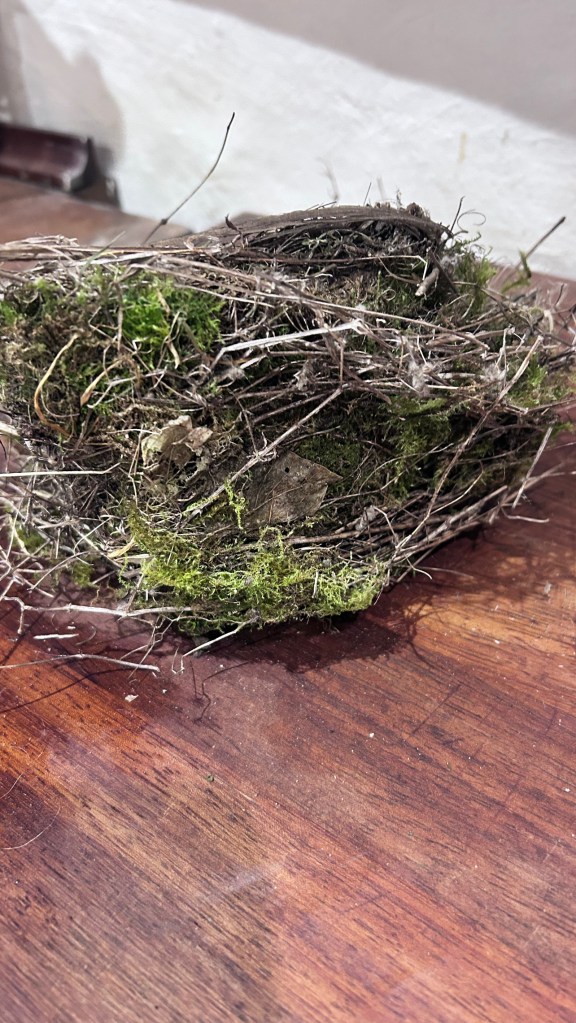
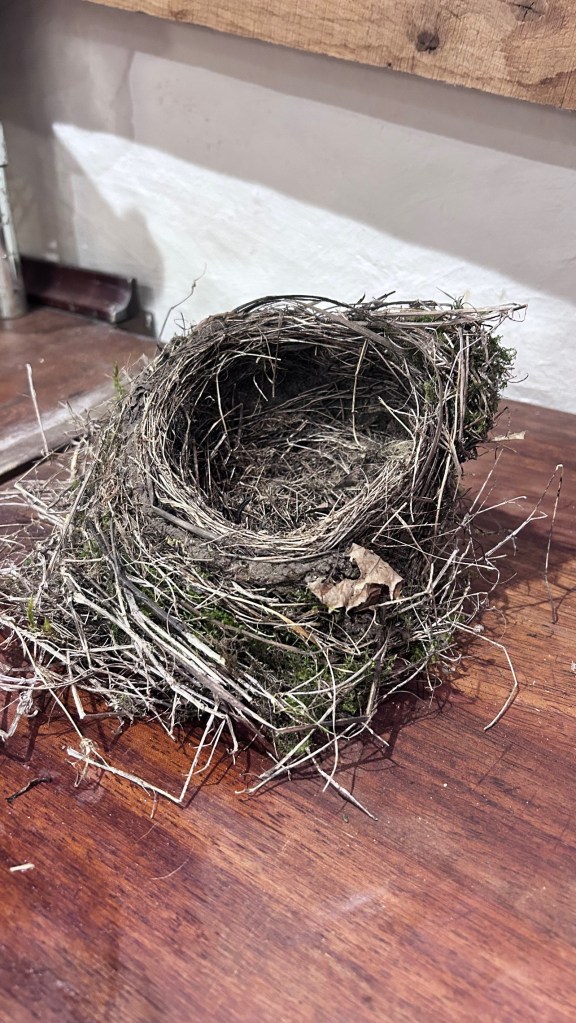
The family had left their carefully crafted happy home, along with the young’un, and kindly donated the uninhabited habitat for me to marvel at and preserve. Never been so close to Nature’s doings, huge in scope, tiny in detail. Happy swooping, baby pidge ❤️
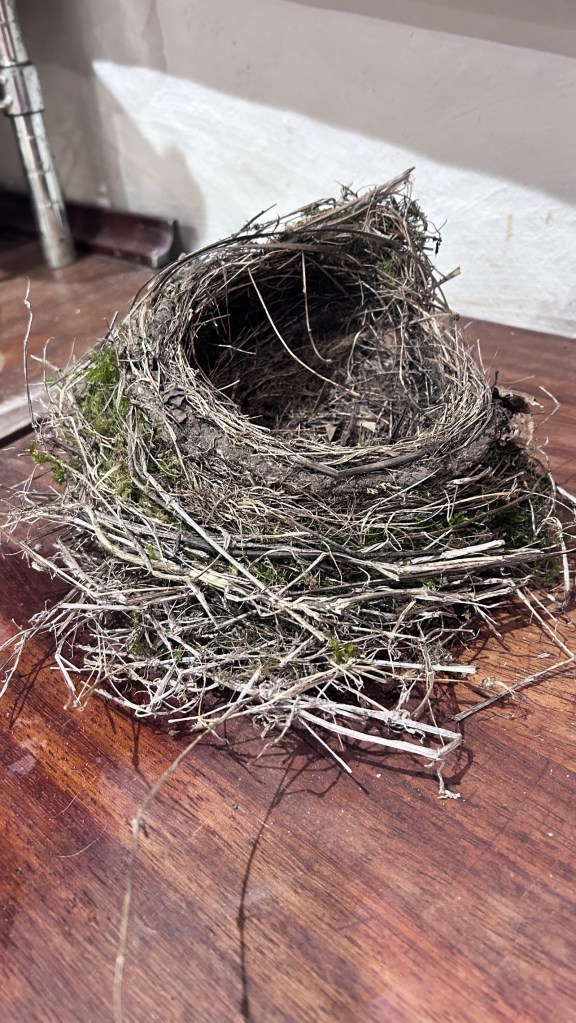
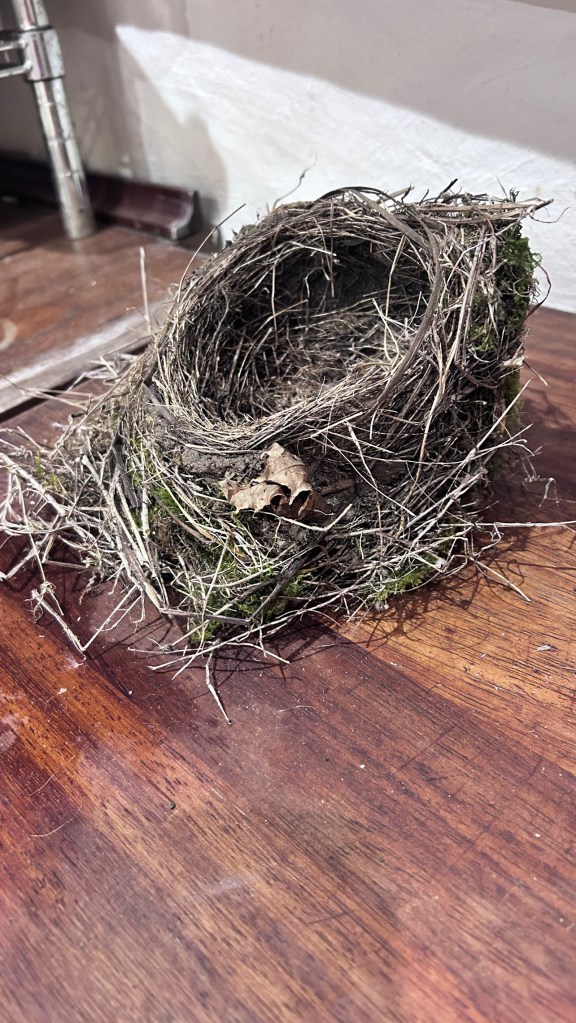
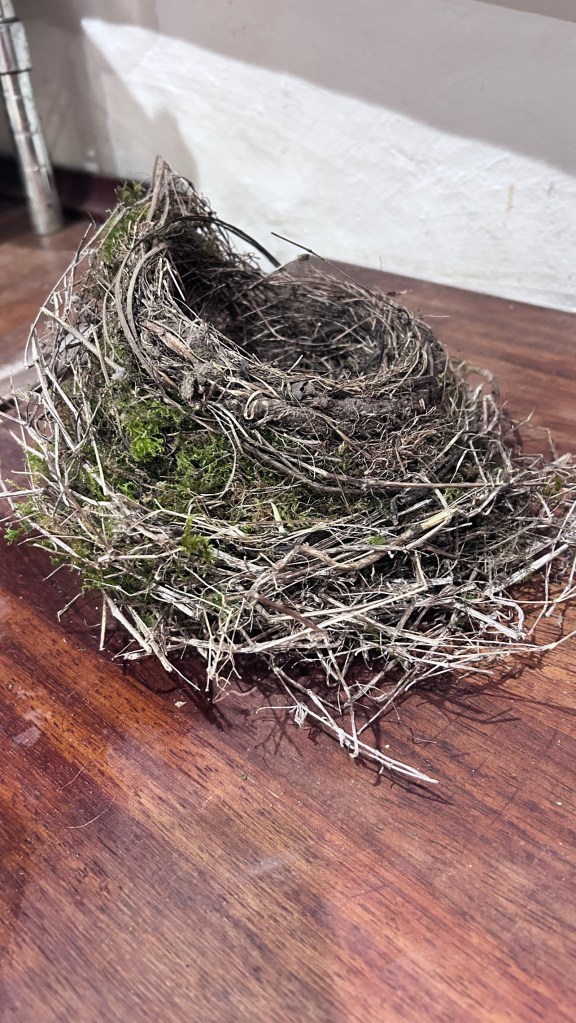
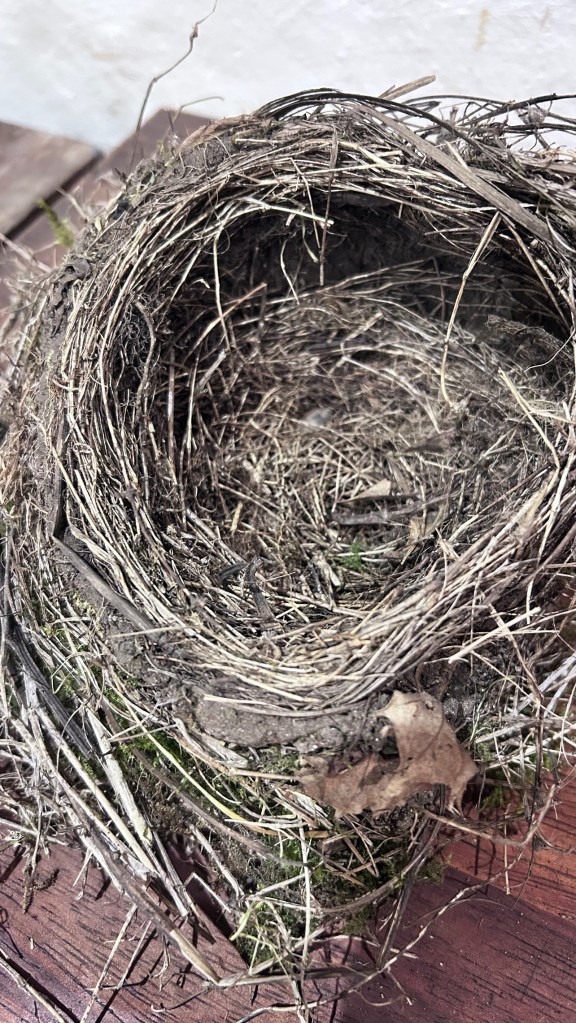
How do they know how to do this?
Juvenile socio-ecological environment shapes material technology in nest-building birds
Behavioral Ecology, Volume 31, Issue 4, July/August 2020, Pages 892–901, https://doi.org/10.1093/beheco/araa027
Published:
30 April 2020
Abstract
Variation in animal material technology, such as tool use and nest construction, is thought to be caused, in part, by differences in the early-life socio-ecological environment—that is, who and what is around—but this developmental hypothesis remains unconfirmed. We used a tightly controlled developmental paradigm to determine whether adult and/or raw-material access in early life shape first-time nest construction in laboratory-bred zebra finches Taeniopygia guttata at sexual maturity. We found that juvenile access to both an unrelated adult and raw material of one color led to a majority preference (75%) by novice builders for this color of material over that for either natal-nest or novel-colored material, whereas a lack of juvenile access to both an unrelated adult and raw material led to a 4- and nearly 3-fold reduction in the speed at which novice builders initiated and completed nest construction, respectively. Contrary to expectation, neither the amount of time juveniles nor their adult groupmate spent handling the raw material appear to drive these early-life effects on zebra finches’ first-time nest construction, suggesting that adult presence might be sufficient to drive the development of animal material technology. Together these data show that the juvenile socio-ecological environment can trigger variation in at least two critical aspects of animal material technology (material preference and construction speed), revealing a potentially powerful developmental window for technological advancement. Thus, to understand selection on animal material technology, the early-life environment must be considered.
 Aidan Walker